
5 Clever Ways How to Build Tool Racks
A well-organized workshop transforms every project from frustrating scavenger hunt to efficient execution. Long-handled shovels leaning against walls eventually crash at 2 AM, and misplaced pruners cost twenty minutes per search. Learning how to build tool racks solves the spatial chaos that plagues gardeners and woodworkers alike, creating dedicated homes for rakes, hoes, loppers, and hand tools. The right rack system maximizes vertical square footage while keeping cutting edges sharp and handles dry.
Materials
Wood selection drives longevity in humid environments. Pressure-treated pine rated for ground contact (0.60 PCF retention) resists rot for 15+ years in zones with annual rainfall exceeding 40 inches. Cedar and redwood contain natural oils that repel moisture without chemical treatment, ideal for organic-focused gardeners who handle tools after soil amendment with blood meal (12-0-0 NPK) or feather meal (13-0-0 NPK).
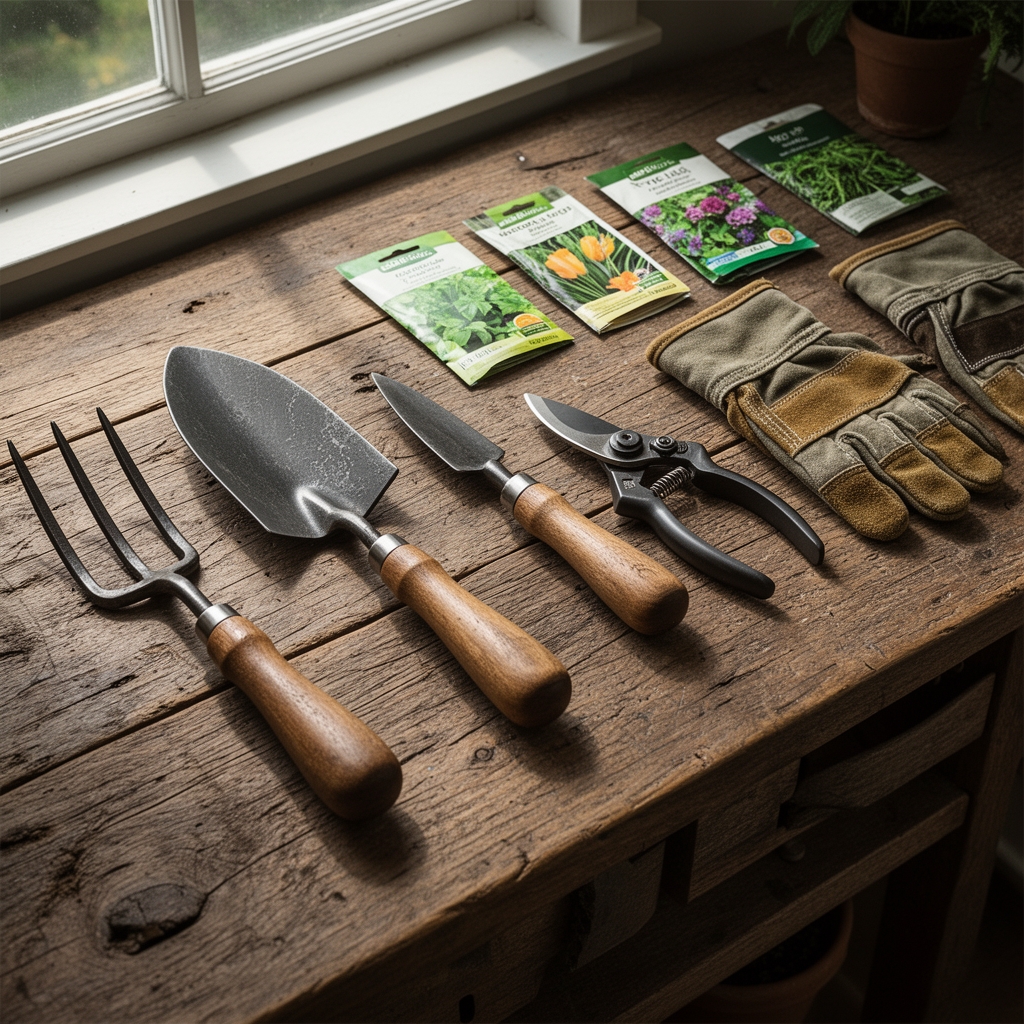
Hardware must match the load. Three-inch exterior-grade screws in 18-8 stainless steel support vertical weight from eight long-handled tools per linear foot without shearing. Galvanized steel corrodes in coastal zones where salt spray exceeds 2 parts per million airborne chloride. Toggle bolts rated for 100 pounds each anchor wall-mounted racks into drywall when studs sit 24 inches on-center rather than the standard 16.
PVC pipe segments create individual tool slots. Schedule 40 pipe in 2-inch diameter accommodates most D-grip handles. Cut segments to 4-inch lengths with a miter saw at 90-degree angles for flush mounting. Sand cut edges with 120-grit aluminum oxide paper to prevent handle abrasion that weakens ash and hickory grain structure over repeated seasonal cycles.
Timing
Hardiness zones dictate outdoor construction windows. In zones 3-5, build between late April and mid-October when overnight temperatures stay above 40°F. Adhesives and exterior stains cure properly only when ambient temperature exceeds manufacturer specifications, typically 50°F for oil-based products and 45°F for water-based latex formulations.
Humidity affects wood joinery. Relative humidity between 40-60% ensures dimensional stability. Wood expands across the grain when moisture content rises above 19%, causing gaps in glued joints. Winter construction in heated workshops requires 48-hour acclimatization of lumber at room temperature before cutting to prevent seasonal movement that loosens mortise-and-tenon connections.
Phases

Sowing (Frame Construction)
Cut vertical supports from 2×4 lumber at 48 inches for wall-mounted racks or 72 inches for freestanding units. Space horizontal crosspieces at 12-inch intervals, secured with two screws per joint driven at opposing 30-degree angles to prevent rotation under asymmetric loads. This technique mimics the auxin distribution patterns in woody stems that resist lateral shear forces.
Predrill pilot holes at 70% of screw shank diameter. Dense hardwoods like oak require 7/64-inch pilots for #10 screws, while softer pine accepts 1/16-inch holes. Drilling without pilots splits grain fibers parallel to growth rings, compromising structural integrity equivalent to removing 40% of cross-sectional area.
Pro-Tip: Apply polyurethane wood glue (4,000 PSI dry strength) to joints before screwing. Glue penetrates 1/32 inch into grain, creating mechanical interlock that doubles joint strength compared to fasteners alone.
Transplanting (Mounting Systems)
Locate wall studs with an electronic scanner accurate to +/- 1/4 inch. Mark stud centers with pencil. Position rack top edge at 60 inches from floor, keeping handles below shoulder height to reduce rotator cuff strain during 50+ daily retrieval cycles during peak growing season.
Drill 1/4-inch pilot holes through rack frame and 3 inches into studs. Drive 3.5-inch lag screws with washer heads, tightening to 20 foot-pounds of torque. Overtightening crushes wood fibers, reducing cation exchange capacity in the cellular structure and weakening hold strength by 30%.
Pro-Tip: Install racks on north-facing walls in southern zones 7-10. Direct sun exposure raises surface temperature above 140°F, degrading lignin bonds in wood similar to how excessive soil temperature (above 85°F) inhibits mycorrhizal fungi colonization in root zones.
Establishing (Tool Organization)
Group tools by handle length and weight distribution. Place heaviest items (digging bars, mattocks) in lowest positions to lower center of gravity. Suspend long-handled tools through PVC collars spaced 6 inches apart, preventing handle contact that transfers moisture and accelerates rot.
Install magnetic strips for hand pruners, soil knives, and trowels. Neodymium magnets rated N52 hold 8 pounds per square inch, sufficient for tools weighing up to 1.5 pounds. Position strips at 48 inches high for ergonomic access without bending.
Pro-Tip: Coat tool handles annually with boiled linseed oil (3:1 oil-to-turpentine ratio). Oil penetrates 1/16 inch deep, displacing moisture and preventing dimensional changes analogous to how humic acid improves soil aggregation and water retention in clay loam with cation exchange capacity above 20 meq/100g.
Troubleshooting
Symptom: Screws loosening after 6 months.
Solution: Replace with screws 1/2 inch longer. Original fasteners failed to penetrate minimum 1.5 inches into solid wood required for 200-pound shear resistance.
Symptom: Warping in horizontal crosspieces.
Solution: Replace with kiln-dried lumber (moisture content below 15%). Air-dried wood retains 19-22% moisture, shrinking 1/8 inch per foot of width as it equilibrates to indoor conditions.
Symptom: PVC collars cracking in cold.
Solution: Switch to Schedule 80 PVC with 50% thicker walls. Standard Schedule 40 becomes brittle below 32°F, losing 70% of impact strength.
Symptom: Rust stains bleeding onto wall.
Solution: Replace zinc-plated hardware with stainless steel. Galvanized coatings fail after 18-36 months in environments exceeding 60% relative humidity.
Symptom: Rack pulling away from drywall anchors.
Solution: Relocate to wall studs or install 1/2-inch plywood backing across 32 inches horizontal span. Drywall anchors fail at 50-70 pounds depending on gypsum density (35-55 PCF).
Maintenance
Inspect mounting hardware every 6 months. Tighten loose screws to original torque specifications. Check for cracks in wood extending more than 1/4 inch deep, indicating structural failure requiring replacement.
Clean racks quarterly with mild detergent (pH 7-8) and water. Avoid alkaline cleaners above pH 10 that saponify wood resins and weaken lignin bonds. Rinse thoroughly, allowing 24 hours drying time before rehanging tools.
Apply exterior-grade stain or sealant every 24 months. Products containing zinc oxide or titanium dioxide UV blockers prevent photodegradation that reduces tensile strength by 15% per year under direct sun exposure exceeding 6 hours daily.
Sharpen tool edges before storage. Dull hoe blades require 40% more force, increasing handle stress and joint failure risk. Use 10-inch mill files at 20-degree angles for carbon steel, maintaining factory bevel geometry.
FAQ
How much weight can a wall-mounted tool rack hold?
A properly installed rack anchored into two studs supports 300 pounds distributed across 48 inches. Concentrated loads above 50 pounds per linear foot require additional vertical supports every 16 inches.
What spacing prevents tool handle contact?
Space long-handled tools 6 inches apart center-to-center. Closer spacing traps moisture between handles, creating conditions favorable for fungal growth similar to excessive thatch (above 1/2 inch) in turfgrass promoting Rhizoctonia solani.
Can pressure-treated wood be used indoors?
Post-2003 alkaline copper quat (ACQ) treated lumber is safe for enclosed spaces after 72-hour off-gassing period. Avoid pre-2003 chromated copper arsenate (CCA) lumber containing arsenic compounds.
How do freestanding racks prevent tipping?
Extend base footprint to 24 inches depth minimum. Add 40 pounds of ballast (sand-filled concrete blocks) at bottom, lowering center of gravity below 18 inches from floor level.
What diameter PVC fits standard tool handles?
D-grip handles (1.25-1.5 inch diameter) require 2-inch ID pipe. Straight handles (1-1.25 inch) fit 1.5-inch pipe. Measure handle diameter at widest point before cutting pipe segments.