9 Simple Steps to Use Oscillating Sprinklers
Morning dew evaporates faster than most gardeners realize, often robbing lawns and borders of critical moisture before roots absorb it. Learning the steps to use oscillating sprinklers correctly transforms irrigation from guesswork into precision. These devices distribute water in a rectangular pattern, mimicking natural rainfall while reducing runoff on slopes up to 12 degrees. Proper setup considers soil texture, cation exchange capacity, and evapotranspiration rates to deliver exactly 1 inch per week during active growth. The difference between a stressed lawn with shallow roots and a resilient turf lies in methodical sprinkler deployment.
Materials
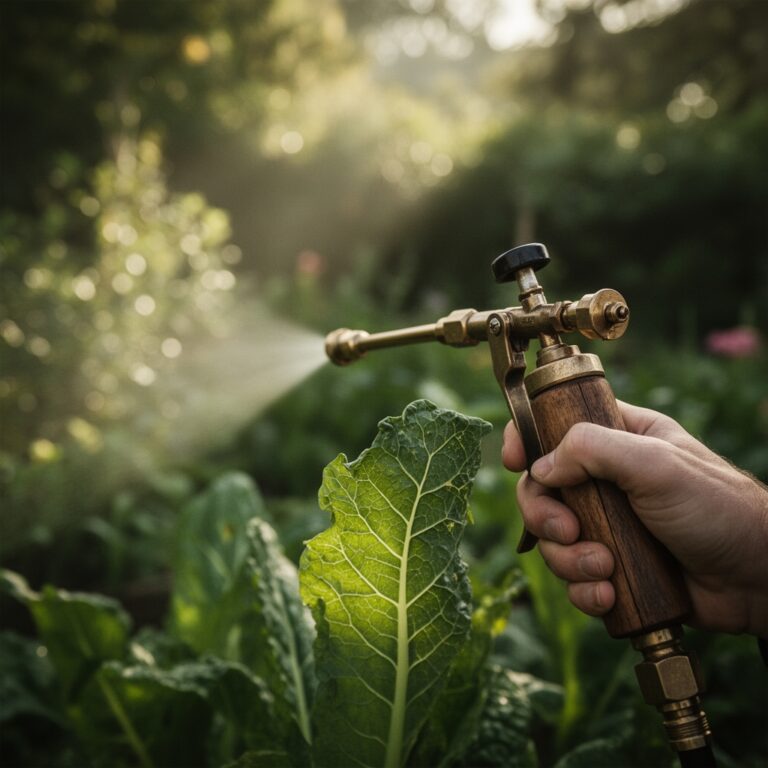
Select an oscillating sprinkler rated for your water pressure, typically 40 to 60 PSI for residential systems. Models with brass nozzles resist corrosion better than plastic variants in hard water (pH above 7.5). Pair the sprinkler with a programmable timer featuring rain delay functions to prevent overwatering after precipitation events.
Soil amendments improve water retention. Apply 2 inches of composted bark mulch (carbon-to-nitrogen ratio 25:1) around ornamentals to reduce evaporation by 30 percent. For lawns on sandy loam, incorporate sulfur at 5 pounds per 1,000 square feet to lower pH from 7.8 to 6.5, optimizing iron and manganese availability. A balanced granular fertilizer (10-10-10 NPK) applied at 1 pound of nitrogen per 1,000 square feet supports root development when irrigation schedules stabilize.
Test kits measuring electrical conductivity (EC) prevent salt buildup in arid climates. Aim for EC below 2.0 dS/m for most turfgrasses. Gypsum (calcium sulfate) at 40 pounds per 1,000 square feet improves water infiltration in clay soils with high sodium content.
Timing
Install oscillating sprinklers two weeks before the last expected frost date in Zones 5 through 7, allowing soil temperatures to reach 50°F at 4-inch depth. Cool-season grasses like Kentucky bluegrass germinate best when daytime air temperatures hover between 60°F and 75°F. In Zones 8 through 10, deploy sprinklers in early September as warm-season grasses transition into fall growth.
Avoid midday watering. Schedule cycles between 4 a.m. and 8 a.m. when wind speeds drop below 5 mph and humidity exceeds 60 percent. This timing reduces evaporative loss by up to 40 percent compared to afternoon sessions. In xeric landscapes, water every 10 days during spring establishment, then shift to bi-weekly sessions once mycorrhizal fungi colonize root zones.
Phases

Sowing Phase
Position the sprinkler to achieve 70 percent overlap between adjacent passes. Measure coverage by placing straight-sided cans (tuna or cat food tins work well) at 5-foot intervals across the pattern. Run the system for 30 minutes, then measure water depth in each container. Adjust arc width and oscillation speed until variance remains below 0.15 inches between cans.
For new seed, deliver 0.25 inches daily to keep the top 0.5 inches of soil consistently moist. Germination rates drop 50 percent when surface moisture fluctuates. Apply a starter fertilizer (18-24-12 NPK) at half the recommended rate to avoid salt injury on emerging radicles.
Pro-Tip: Inoculate soil with Rhizophagus irregularis spores at seeding. This arbuscular mycorrhizal species extends water uptake range by 10 to 15 cm beyond root hairs, critical during establishment.
Transplanting Phase
After seedlings reach 2 inches, reduce frequency to every other day but increase duration to deposit 0.5 inches per cycle. Roots now penetrate 3 inches and require deeper moisture to follow auxin distribution signals downward. Shallow, frequent watering promotes lateral root growth and thatch accumulation.
Transplanted shrubs and perennials need 2 inches weekly for the first month. Create a 3-inch soil berm around each plant's drip line to capture runoff. Check soil moisture at 6-inch depth with a penetrometer or screwdriver; resistance indicates adequate hydration.
Pro-Tip: Prune sprinkler nozzles at 15-degree angles toward prevailing winds. This adjustment counters wind drift and maintains even distribution on exposed sites.
Establishing Phase
Taper irrigation to 1 inch weekly once roots reach 6 inches. Deep watering every 5 to 7 days trains roots to explore lower soil horizons where moisture remains stable. Monitor leaf water potential with a pressure chamber; readings above -1.5 MPa indicate stress in most ornamentals.
Adjust sprinkler patterns seasonally. Reduce coverage by 20 percent in fall as evapotranspiration declines. Winter watering (once monthly in Zones 6 and 7) prevents desiccation damage to evergreen roots when soil remains unfrozen.
Pro-Tip: Install a soil moisture sensor 4 inches deep in the driest zone. Program the timer to skip cycles when volumetric water content exceeds 25 percent, preventing anaerobic conditions that kill feeder roots.
Troubleshooting
Symptom: Yellow rings or arcs in turfgrass.
Solution: Indicates uneven water distribution. Recalibrate sprinkler overlap using the can test. Replace worn bearings causing irregular oscillation.
Symptom: Algae or moss growth in shaded areas.
Solution: Excess moisture from overlapping spray. Reduce runtime by 25 percent in low-light zones. Aerate soil to improve drainage and oxygen diffusion.
Symptom: Wilting despite daily watering.
Solution: Shallow root syndrome. Shift to deep, infrequent cycles. Core aerate compacted soil to restore pore space above 15 percent by volume.
Symptom: White crust on soil surface.
Solution: Salt accumulation from poor-quality water or over-fertilization. Leach soil with 2 inches of low-EC water. Test irrigation water; sodium adsorption ratio above 9 requires gypsum amendment.
Symptom: Brown leaf tips on ornamentals.
Solution: Fluoride or chloride toxicity from municipal water. Install an activated carbon filter on the supply line or collect rainwater in 50-gallon barrels.
Maintenance
Flush sprinkler heads monthly to remove sediment clogging nozzles. Disassemble units annually to inspect gaskets and lubricate metal pivots with silicone grease. Replace nylon gears every 200 operating hours (approximately two seasons of daily use).
Winterize systems in Zones 3 through 6 by draining all water and storing sprinklers indoors. Residual moisture expands during freezing, cracking housings and rupturing seals. Blow out supply lines with compressed air at 40 PSI maximum to avoid pipe damage.
Calibrate timers each spring. Battery-operated models lose 10 percent accuracy per year. Manual run tests verify actual output matches programmed duration.
FAQ
How long should I run an oscillating sprinkler?
Run for 45 to 90 minutes to deliver 1 inch, depending on water pressure and coverage area. Use the can test to determine your system's specific rate.
Can oscillating sprinklers damage plants?
High-pressure streams (above 65 PSI) dislodge mulch and expose roots. Install a pressure regulator at the hose bib to maintain 50 PSI.
What sprinkler pattern works best for slopes?
Position sprinklers at the top, angling downward. Water moves 30 percent faster downhill; reduce runtime by 20 percent to prevent erosion.
Do oscillating sprinklers conserve water?
When calibrated correctly, they match drip systems in efficiency for large areas. Overlap precision and timing reduce waste by 35 percent versus manual watering.
How do I prevent fungal disease?
Water before 8 a.m. so foliage dries by noon. Fungi like Rhizoctonia and Pythium require 8-hour leaf wetness periods to infect tissue.