10 Expert Ways How to Use Spading Forks
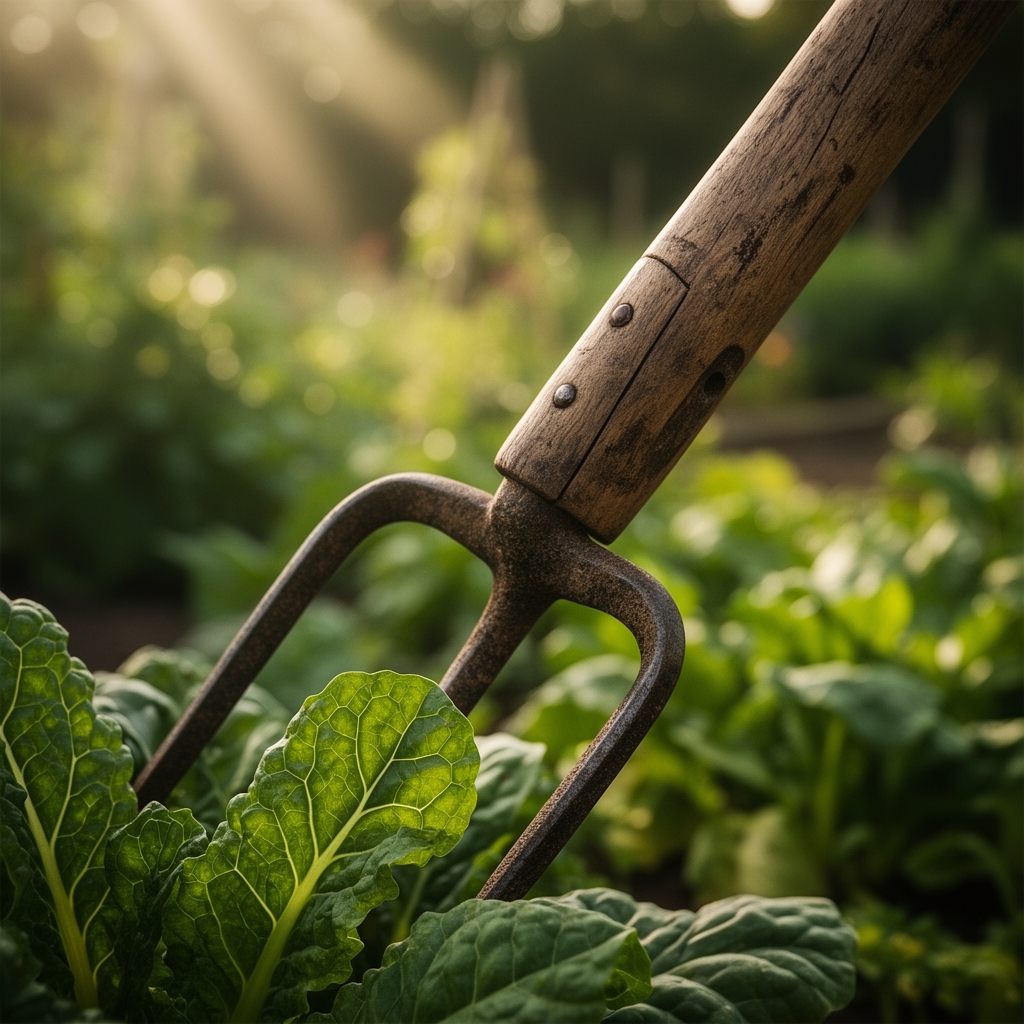
The cold steel tines of a spading fork sink through compacted clay with far less effort than a spade's flat blade. Professional growers and soil scientists recognize this four-pronged tool as essential for aerating beds, lifting root vegetables, and incorporating amendments without pulverizing soil structure. Learning how to use spading forks correctly preserves beneficial microbe colonies and maintains aggregate stability that rototillers destroy. The technique separates backyard hobbyists from practitioners who understand cation exchange capacity.
Materials
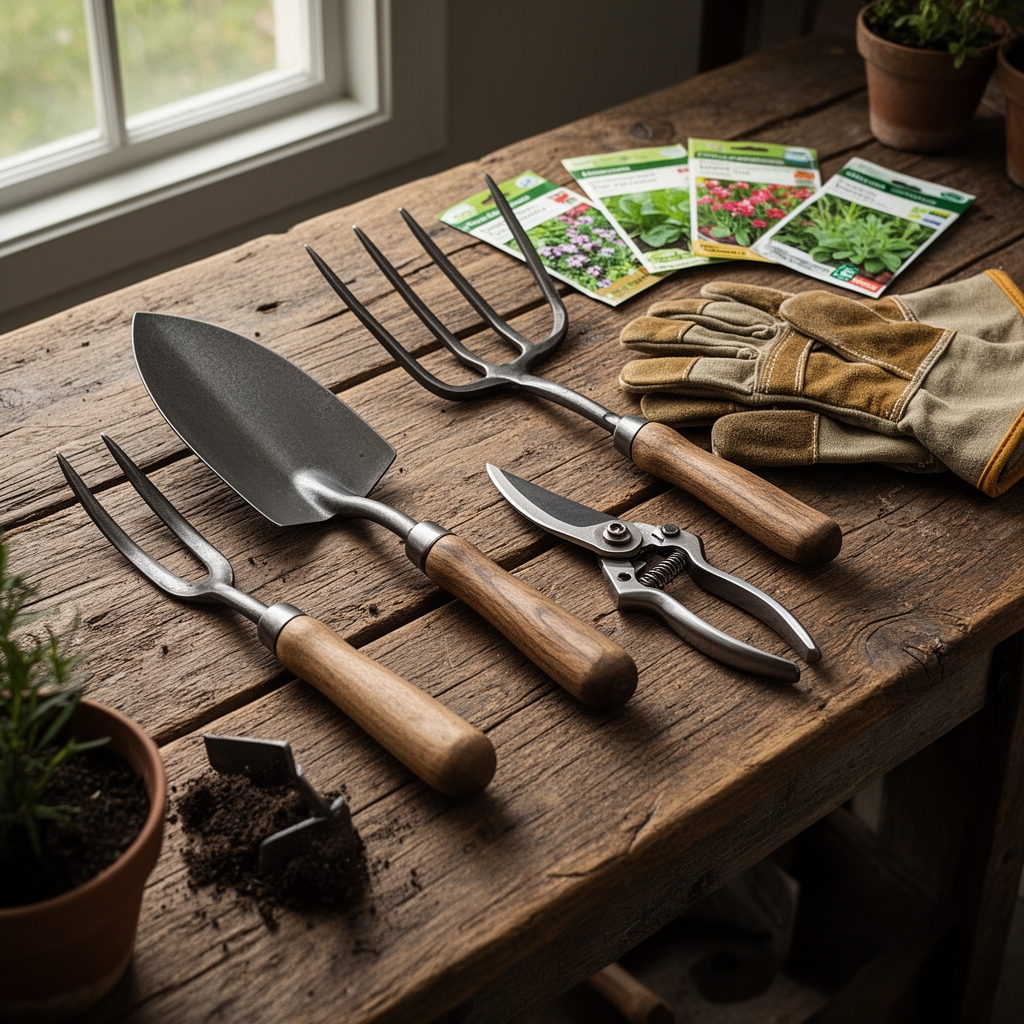
Select a spading fork with four flat tines, 12 inches in length, forged from tempered steel rather than stamped sheet metal. The D-grip handle should reach mid-thigh height when the tines rest on level ground. Pair the fork with amendments matched to your soil test: aged manure (0.5-0.5-0.5), alfalfa meal (3-1-2), kelp meal (1-0.2-2), or rock phosphate (0-3-0) for phosphorus-deficient sites below pH 6.5. Clay soils with pH above 7.2 benefit from elemental sulfur at 1 pound per 100 square feet. Sandy loams require biochar at 10% by volume to increase water-holding capacity. Mycorrhizal inoculant powder (Rhizophagus irregularis) at 0.2 ounces per 10 square feet colonizes root zones when applied during initial fork-turning.
Timing
Hardiness zones 5-7 allow fork work from late March through mid-November, avoiding periods when soil moisture exceeds field capacity. The squeeze test confirms readiness: a handful of soil forms a ball that crumbles under light thumb pressure. Zones 8-10 permit year-round spading fork use except during the 14 days following saturation events exceeding 2 inches of rainfall. Spring amendment incorporation should occur 21 days before last frost date, allowing mineralization of organic nitrogen. Fall forking happens after first frost when root crops reach maturity but before soil temperatures drop below 40°F, which halts microbial decomposition.
Phases
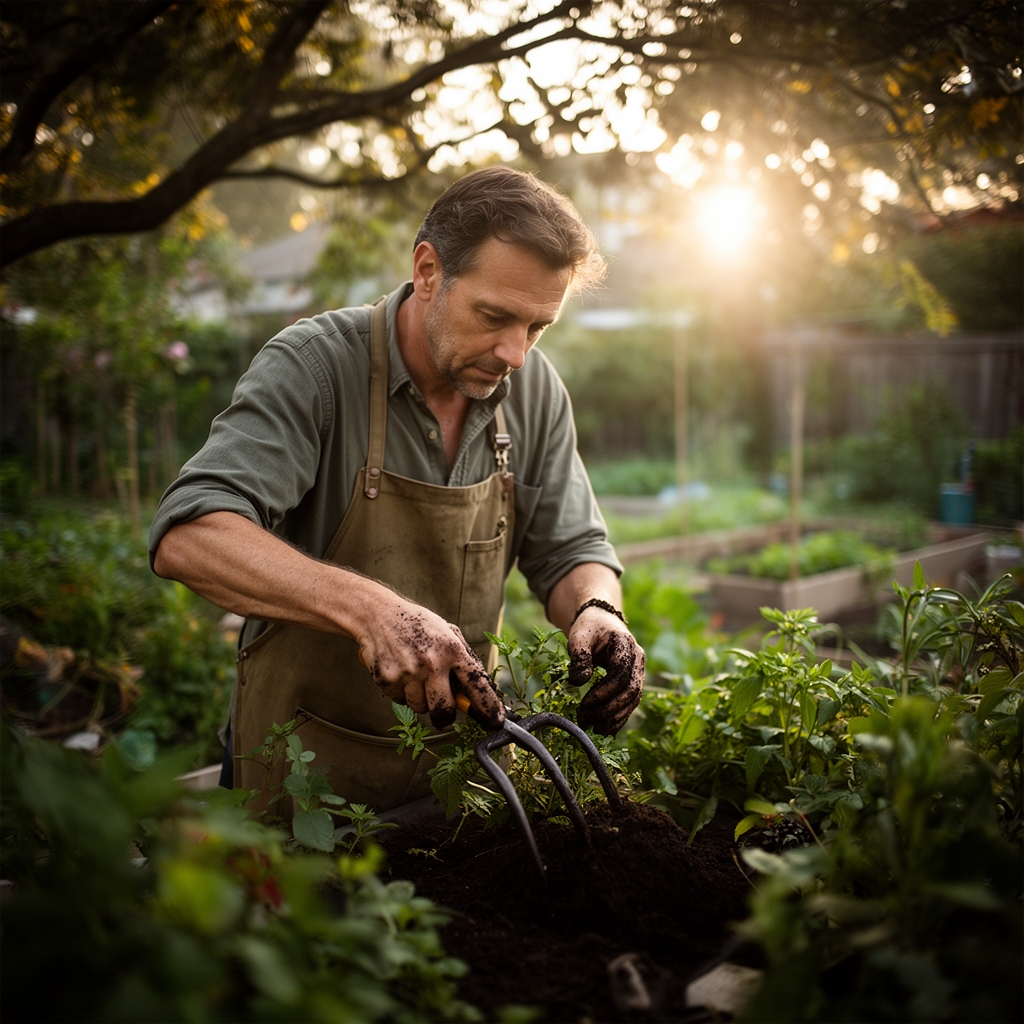
Sowing Preparation: Drive the fork vertically into untilled ground at 8-inch intervals across the bed width. Rock the handle backward 15 degrees without lifting, creating fissures that admit oxygen to anaerobic lower horizons. Repeat in a perpendicular pattern. Broadcast compost at 1 cubic yard per 100 square feet, then insert the fork at 45-degree angles to fold material into the top 6 inches. Avoid inversive turning that buries topsoil microbes below their optimal depth.
Pro-Tip: Sprinkle Azospirillum brasilense inoculant (nitrogen-fixing bacteria) onto moist compost before forking to boost available nitrogen by 18-25 pounds per acre equivalent.
Transplanting: Loosen transplant zones by inserting the fork 10 inches from the planting hole and levering backward. This fractures hardpan layers without disturbing the immediate root cavity. For brassicas and solanaceous crops, create a planting pocket by removing the fork, adding 2 tablespoons of bone meal (3-15-0) to the void, then reinserting at the same angle to mix amendment at root depth.
Pro-Tip: Maintain fork tine angle at 70 degrees when working within 8 inches of established root systems. Steeper angles sever feeder roots and disrupt auxin distribution.
Establishing Root Crops: Harvest carrots, parsnips, and salsify by inserting the fork 4 inches from the crown at a 60-degree angle. Drive tines to full depth, then lever the handle toward the plant to lift the entire root without breakage. For potatoes, position the fork 12 inches from the stem and approach horizontally to avoid spearing tubers. Flip the root mass onto the bed surface for manual sorting.
Pro-Tip: After harvest, fork-aerate the zone immediately and seed a winter cover crop (Vicia villosa, hairy vetch) to fix 100-150 pounds of nitrogen per acre before spring tillage.
Troubleshooting
Symptom: Fork tines bend during use.
Solution: Soil exceeds 25% moisture content. Wait 48-72 hours. Consider raised beds in zones with clay content above 40%.
Symptom: Compaction returns within 30 days.
Solution: Subsurface hardpan exists below fork reach. Use a broadfork with 18-inch tines, or apply gypsum (calcium sulfate) at 40 pounds per 1,000 square feet to improve aggregate stability through calcium bridging.
Symptom: White grubs (Phyllophaga spp.) exposed during forking.
Solution: Collect manually and place in poultry enclosures. Apply entomopathogenic nematodes (Heterorhabditis bacteriophora) at 25 million per 1,000 square feet within 12 hours of fork disturbance when soil temperatures exceed 55°F.
Symptom: Amendment layers remain unmixed after forking.
Solution: Material too dry. Irrigate to 12 inches depth, wait 6 hours, then re-fork using a twisting motion as tines withdraw.
Maintenance
Water fork-worked beds with 1 inch per week during establishment, measured with rain gauges at four corners. Apply mulch (shredded hardwood bark, 3 inches deep) after final forking to maintain 65-75% soil moisture. Re-aerate annually in fall by forking to 8 inches depth, incorporating cover crop residue at a 25:1 carbon-to-nitrogen ratio. Clean tines after each use with a wire brush and coat with linseed oil to prevent rust. Sharpen tine edges every 50 hours of use with a mill bastard file at a 20-degree angle. Store forks vertically to prevent handle warping.
FAQ
How deep should a spading fork penetrate?
Eight to ten inches for annual beds. Twelve inches for perennial plantings requiring deeper root exploration.
Can spading forks replace rototillers?
Yes, for areas under 500 square feet. Forks preserve soil structure and reduce fuel costs by 100%.
What is the ideal fork spacing for clay amendment?
Six-inch centers in both directions when incorporating sand or compost exceeding 2 inches depth.
Do forks damage earthworm populations?
Minimal impact when worked at temperatures above 50°F. Worms retreat from vibration. Rototillers cause 60-80% mortality versus 5-10% for forks.
Should forks be sterilized between beds?
Yes, when moving from diseased areas. Use 10% bleach solution (0.6% sodium hypochlorite) and rinse thoroughly to prevent phytotoxicity.